

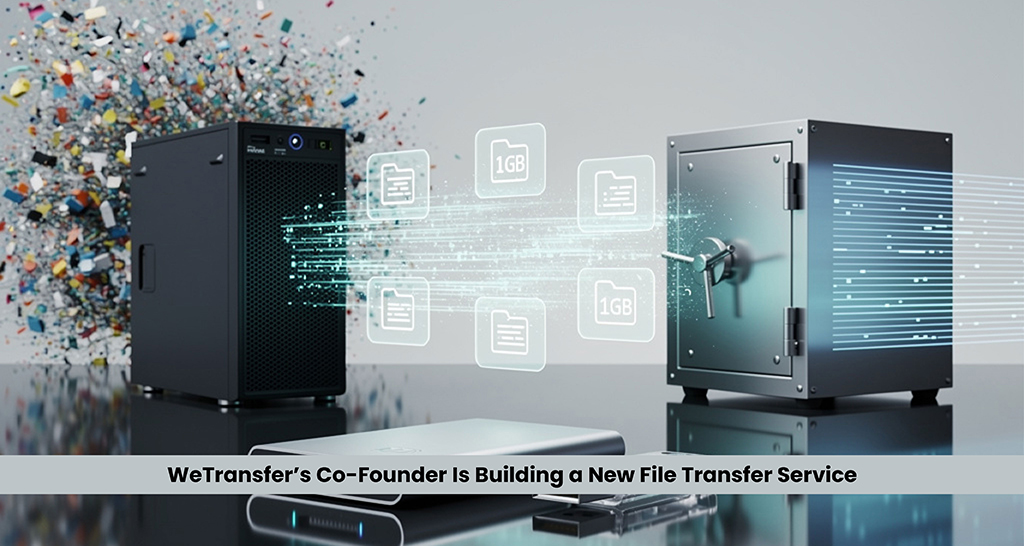
After more than ten years of helping to create one of the internet’s most popular file-sharing tools, a co-founder of WeTransfer is making a return to familiar ground. This time, he’s launching a new product that directly takes on what his original company has evolved into.
Ronald Hans, better known as Nalden, was one of the key players in launching WeTransfer back in 2009. At that time, the service really stood out because of its straightforward simplicity. When sending large files was often a hassle and required some technical know-how, WeTransfer provided a clean, no-nonsense experience that quickly captured the hearts of designers, photographers, musicians, and everyday users alike. Over the years, it blossomed into a globally recognized brand, becoming an essential part of creative workflows all around the world.
According to Nalden, the original essence of WeTransfer has really changed. Ever since a big European software group took over, the platform has seen some significant shifts from new interface designs to updated policies and internal changes. While the company has been working to diversify its revenue and roll out new features, many long-time users feel that the service has become more complex, less transparent, and not as in tune with what its core audience really needs.
Nalden’s frustrations led him to create a brand-new file transfer service from the ground up. He’s not trying to outdo WeTransfer in terms of scale or features; instead, he wants to focus on the essentials: speedy uploads, minimal hassle, and clear protections for user data. This new platform lets users send files without the need for mandatory sign-ups, annoying tracking, or ads, reminiscent of the original WeTransfer that first captured people’s attention.
The service operates on a straightforward model. Casual users can send files of a moderate size for free, with the added feature of automatic expiry. For those who need more, power users can choose from paid plans that allow for larger transfers, extended storage times, and extra security features like password-protected folders. A key point to note is that the product intentionally avoids bundling file transfers with unrelated tools or creative software, which is a conscious decision aimed at keeping the user experience streamlined.
Nalden has taken a stand with the platform, addressing the rising concerns about how uploaded content is handled, especially in this era of artificial intelligence. The aim is to provide users with clear and straightforward policies that assure them their files will not be used for anything other than reaching the intended recipient.
The launch may be in its early stages, but it is already catching the eye of creatives and freelancers who often feel overlooked by the increasingly corporate digital tools out there. For Nalden, this project is not just about looking back; it is driven by a strong belief that even in a tech world that feels crowded, there’s still space for products that excel at one thing and truly respect their users.