
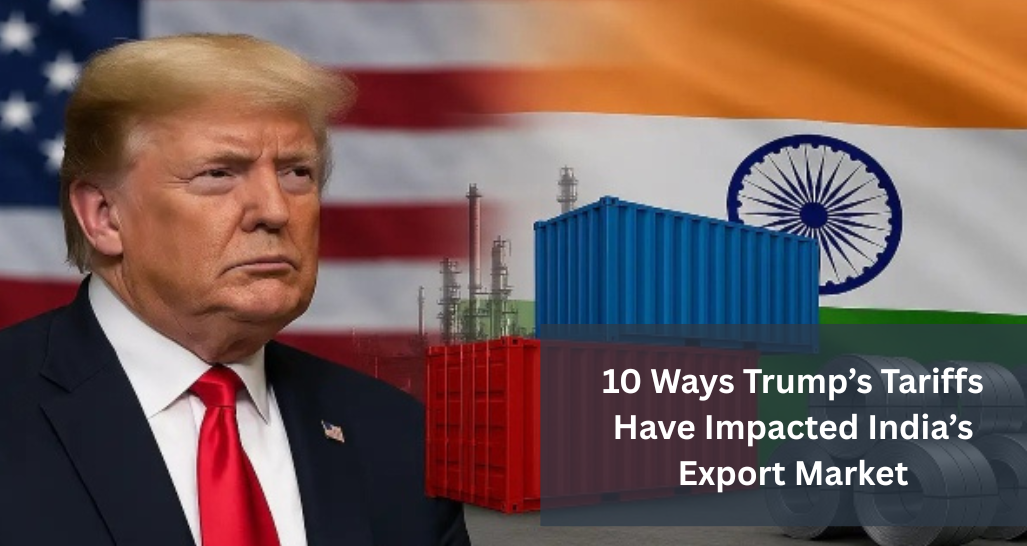
When former U.S. President Donald Trump introduced his assertive tariff policies as part of the “America First” agenda, India was one of the nations that experienced the subsequent effects. The United States ranks as one of India’s prime trading partners, and the tariffs had a considerable impact on crucial export sectors. Below are ten significant ways in which these measures affected India’s export market:
Reduced Access for Steel and Aluminum
Trump’s inclusive tariffs on steel and aluminum have adversely affected Indian exporters, diminished their competitive edge, and prompted them to seek out alternative markets.
Pressure on Small and Medium Exporters
Numerous small Indian companies dependent on U.S. customers encountered increased expenses because of tariffs. This situation constrained their capacity to set competitive prices and diminished profit margins.
Impact on IT Hardware Exports
While services were not as specifically targeted, some hardware components exported from India encountered tariff obstacles, which somewhat impacted India’s technology hardware trade with the United States.
Pharmaceutical Sector Caution
India’s pharmaceutical sector, a important supplier to the U.S., experienced uncertainty due to tariffs that established an unpredictable policy landscape, which in turn dissuaded long-term investments.
Diversification of Markets
Indian exporters were required to lessen their dependence on the U.S. and enhance relationships with Europe, Southeast Asia, and Africa, thereby expediting diversification strategies.
Agricultural Exports Affected
Certain agricultural goods, such as processed foods and spices, faced trade tensions, resulting in reduced profitability for exports due to increased tariffs.
Generalized System of Preferences (GSP) Withdrawal
In 2019, the Trump administration rescinded India’s preferential trade advantages under the GSP program, which had permitted duty-free entry for approximately $5.6 billion worth of goods. This decision increased expenses for numerous Indian products in the U.S. market.
Wider Trade Deficit Pressure
Trump’s emphasis on decreasing the U.S. trade deficit resulted in more rigorous examination of imports from India, thereby making export opportunities more challenging.
Boost to Local Competitors
Due to the increased tariffs on Indian goods, domestic U.S. manufacturers and exporters from other countries have acquired a comparative price advantage, which has led to a decrease in India’s market share.
Catalyst for Policy Shifts in India
The tariffs have led India to reassess its export strategies, engage in negotiations for new trade agreements, and increase investments in domestic value chains to better endure global trade disruptions.
Conclusion
The tariffs imposed by Trump and the termination of GSP privileges have undoubtedly posed significant challenges to India’s export market, compelling businesses to swiftly adjust. Although the immediate consequences involved a decline in revenue and diminished competitiveness, the enduring impact has been a drive towards diversification and enhanced resilience within India’s trade strategy.