Emilio Billi: Solving the Most Challenging Problems

Emilio Billi’s journey started back in 1996 when he was a nuclear engineering student and became passionate about AI and computer-assisted calculus. He specialized in mathematics and devoted himself to the study of supercomputers. At that point of time, Emilio realized that computer power was essential to exploit AI and make it a reality. He felt that just as a human brain possesses an enormous amount of computing power, which is higher than most supercomputers, it was essential to arrive at a computing power that at least came close at a reasonable price to that of a brain to operate the AI systems. So, he started studying how to transform commercial computers into real supercomputers at a very reasonable price and within reach of many. Emilio eventually developed faster hardware computing engines and interconnection systems, which can connect thousands of processors extremely efficiently. At this point of time, he designed very low latency communication protocols. Emilio was also involved in creating the HyperTransport bus, which all AMD processors later used; then, in 2012, it was used by Cray, one of the first supercomputers manufacturers in the world. Driven by the obtained results, Emilio conceived several variants that are still being used in modern processors today.

The Inception Story

Later in 2012, with Antonella Rubico, Emilio Co-founded San Jose-based A3Cube Inc. to transform ordinary servers into extraordinary supercomputers. With his tremendous industry experience, Emilio designed his supercomputers while also dedicating himself to developing increasingly complex algorithms for artificial vision in the industrial field and accelerating access to data in large distributed systems. Along with his company, A3Cube, Emilio created hardware database accelerators like Hadoop and Spark for market forecasting, predictive machine, early diagnostics, etc.

Two years ago, Emilio got a great idea and leveraged his tremendous experience in peripheral interconnect technologies; he designed GRIFO, a supercomputer the size of a rack cabinet with the computing power of a large data center dedicated to data analysis and AI.

“We are living in a historical and technological moment where knowledge will make the difference between being a protagonist or a mere follower, and I want to continue to be a pioneer and protagonist in new technological challenges”

“GRIFO, which today is my real workhorse, has the power of 3 million traditional servers when used for data analysis and the power of many thousands of ordinary computers when used for artificial intelligence while being compatible with standard software on the market.”- says Emilio. “This achievement has been so exciting that it has given me new energy: it is an incredible idea that has opened the door to collaborations with the Department of Defense, large industrial groups, and top-tier companies worldwide.”

Under his leadership, A3Cube is revolutionizing the marketplace for high-performance data analysis and overcoming the challenges of scalable data center architecture and technologies. Before founding the organization, Emilio used to run his own firm for a decade and developed HIDRA personal supercomputer and software suite, the first practical and commercialized compact professional personal supercomputer.

A Different Organization

Emilio feels that A3Cube is a unique company in many ways. It successfully looked beyond the financial and Venture Capitalist trends; it always wanted to play where others had no interest. “I love my job, I love challenges, and I love speed because, for me, computing power is speed. It’s like human intelligence: the smarter you are, the faster you think, the more things you can do, the more successful you can be, and the more problems you can solve.”– he explained.

He has realized that the market also agrees with A3Cube’s vision, and everyone is slowly moving in its direction. With its groundbreaking products, A3Cube is still at the forefront of technology, growing its revenue quickly. As a leading technology tailor, the firm can produce unique systems for solving problems that are nearly impossible for other firms.

A Moment of Reflection

Emilio feels that Covid has been a moment of reflection for him and his company, a reflection on the way of doing business and, at the same time, an opportunity to renew the way of thinking about business and business organizations.

“Today, we can concretely think of a liquid company where it is no longer the physical place that makes the company itself, but the ideas, values, and people are the real wealth. We have been accustomed to thinking that profit is the only purpose of work; today, I think you have to give more than you get paid, thinking of work as a way to improve yourself by improving the lives of others.”– states Emilio.

He feels that in this way, one can end up with much more than he/she would have gotten by only chasing profits. However, to do that, one needs to create relationships with customers and listen to and help them solve problems like partners or associates.

Gearing up for the Future

As the leader of A3Cube, Emilio wants his company to become the new leader in applications of extreme complexity and a problem solver in the AI space, starting right from neural vision, to the application of general AI, to evolutionary AI.

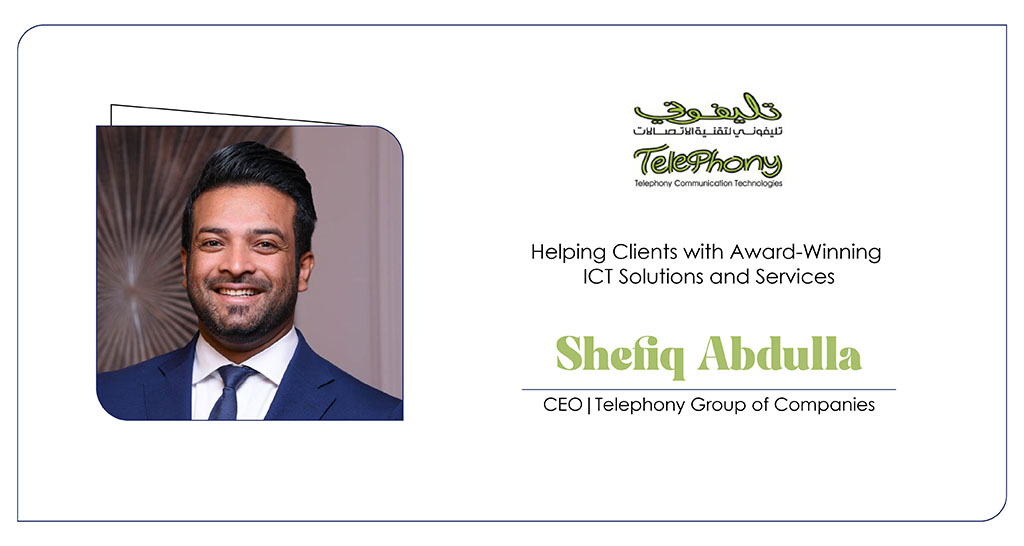
Shefiq Abdulla: Helping Clients with Award-Winning ICT Solutions and Services

Meet Shefiq Abdulla, the CEO of Dubai-based Telephony Group of Companies, an ICT solutions and services leader with over two decades of experience serving the private and public sectors of UAE and the region. Currently, Telephony’s team has over 600 employees in the UAE, with over 300 employees spread across other regions, entirely committed to delivering state-of-the-art telecom technology. 

Shefiq started his career in Sales as an entry-level junior sales representative selling the company’s ideas, innovations, and excellence to the customers. However, he gradually succeeded on the way up and soon became the Chief Executive Officer of the Group Businesses.  

A lot of people consider me lucky for achieving a lot at a young age and becoming a CEO for the whole group. If you look at it from my perspective, you realize that it means that I had to take a lot at a young age and mature early. Everything I do now and with every struggle I face, I feel more determined to continue the path. I hear a lot of whispers about me being a workaholic and so committed to this journey that it might consume me.“- Asserts Shefiq. “But the truth is I find pleasure in what I am currently doing, and this is what gives me power, focus, and a good sense of direction. When you do things out of pleasure, you simply immunize yourself against all the criticism and negativity that you hear now and then.

A Diverse Portfolio

Telephony Group of Company offers a diverse portfolio for its clients, which is reflected in the number of projects it undertakes and its expansions to other countries worldwide. Telephony treats its clients as partners and offers all the possible guidance to help them choose the solutions that best serve their businesses most effectively. Instead of chasing revenues like many other companies, Telephony Group of Company wants to ensure repeat businesses and a lifetime relationship with its clients. 

Shefiq believes that when a company understands its partner’s business needs and offers advice on the right solution and guidance through implementation, it can easily create a win-win situation and profitable business relationship for both. 

Success and Failure

My greatest accomplishment is getting the chance to spread what I know to the world. Knowledge is wasted when not shared. Maybe my audience is small today, but at least now I have a voice and people to read, interact and comment on my thoughts. That is by itself an accomplishment for me.“- says Shefiq.

Shefiq prefers to measure success differently as he doesn’t link it to achievement or growth. Instead, he links it to the positive influence that he leaves on people’s lives. 

Around five years ago, Shefiq decided to take a different path and start to effect change, so he started with himself and went on a personal transformational journey to learn from the wise and the giver, to get enriched with knowledge. Shefiq immersed himself in readings and took a vow to spread that knowledge. One day he plans to write all that journey down for the benefit of others and to encourage people to be less selfish and more human.

Although he failed in various situations and times, every time, Shefiq chose to clear his head, review his mistakes, and start over again. 

Shefiq states, “Perhaps the most important one to mention here is when I happened to expect everyone around to be of the same drive and understanding of the importance of transformation to the sustainability of any business, including my own. Now, I am more mindful of how I want to achieve my objective and will hopefully soon share that vision out loud.

Implementing New Ideas

Shefiq believes new ideas require a welcoming attitude and an open mindset. He says, “If we don’t first start with that, we are likely to fail in our attempts or suffer to reach our goals. I am against the idea that change requires time, not when you are in technology, and you are demanded to innovate consistently.

He wants to convince people regarding the necessity of new ideas instead of enforcing them. With everyone onboard, things mostly go efficiently and smoothly. Shefiq wants to start first by developing a work culture that helps support innovation, quality, and sustainability which are the primary growth driver for any company.

Future Plans

Telephony Group of Companies has a strong vision, with high moral values and dedication, customer-centric innovations, and business ethics. The organization is built on three core pillars- People, Purpose, and Peace. Under Shefiq’s leadership, it further intends to grow, expand, and innovate while maintaining and spreading these values to everyone it works with. 

Additionally, the organization plans to offer digital services to improve efficiency, transform, and grow businesses in the future. It also wants to empower communities to pursue ultra-digital transformation and use technology and innovation to change people’s lives, especially youth and women. 

To enable 3000 women entrepreneurs globally by 2025, the organization is also planning to guide and help ten women in 2022 to start their entrepreneurial journey with it.

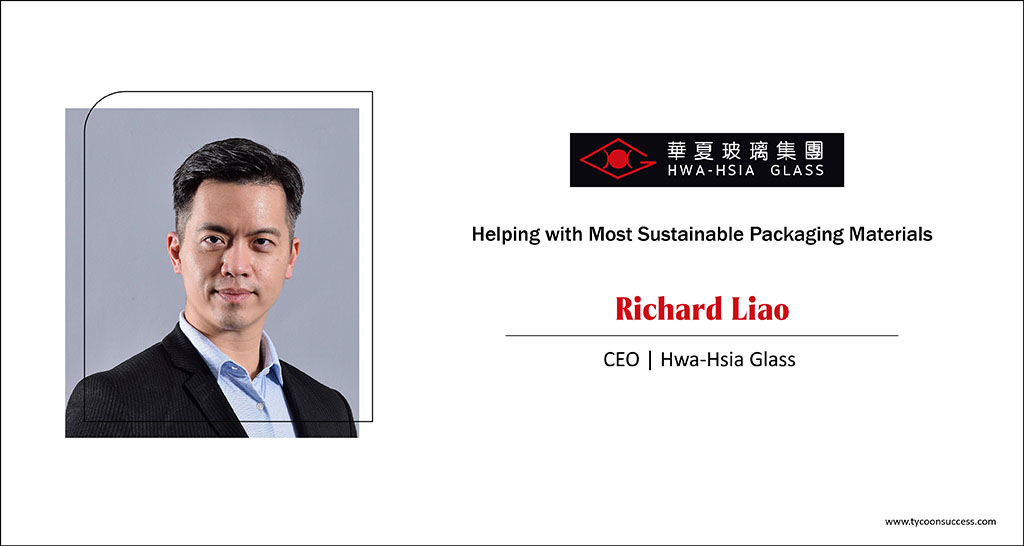
Richard Liao: Helping with Most Sustainable Packaging Materials

Born in Springfield, Illinois., Richard Liao moved back to Hsinchu, Taiwan, at the tender age of two and again returned to the U.S. in 1999. During his second stint in the country, Richard completed his high school in C.A. and finished his college degree from Cornell University with a B.A. in ORIE and a Master of Engineering in Financial Engineering. Soon after completing his education, Richard landed a job at JP Morgan, a corporate & Investment bank on Wall Street. He worked for the investment bank for three years, but due to the subprime mortgage financial crisis, times were not good, so Richard left the organization to complete his MBA from NYU Stern. 

Soon after completing his MBA in 2012, Richard got a call from his dad, as he needed some help with the family business. So, Richard returned to Taiwan and relearned his philosophy on work and what to do with the business. After identifying several critical areas of improvement, Richard could transform the company from a gross margin of 7%, doubling to 14% by 2021 while reducing the total headcount from 1200 to 650. 

Presently, Richard serves as the CEO of his family business Hwa-Hsia Glass, the only glass manufacturing facility specializing in ‘small quantities with a vast variety’ strategy in Asia-Pacific. The organization annually produces nearly 400k tonnes of glass containers, including food, milk, alcoholic beverage, medical-use, light bulb, and cosmetic containers. 

Besides the traditional B2B businesses, Richard helped the company to launch a B2C brand named ‘Aqua-Soul,’ targeting lifestyle-driven consumer segments in daily storage glass products, including decanters, wine, and whiskey glasses, tea sets, etc., to introduce glass in a much more elegant way. 

We also focus on B2B2C clients with our “total solution strategy”- for small retailers who want to open new restaurants, shops we can provide end-to-end solutions for any glass-related packaging needs, and we launched on our e-commerce platforms such as Alibaba or Amazon, Shoppee, etc.“- states Richard.

Reviving the Brand

Once Richard decided to help his family run H.H. Glass, he realized the company was facing three primary problems, firstly, it had no new business model; secondly, it failed to attract employees; and thirdly, the image of the industry.

  • Solving the old problem: The Aquasoul brand and total solution were Richard’s ideas, so the company could create a new business model and improve its gross margin. Richard demanded that the team must give H.H. glass 30% of the gross margin, which resulted in a gradual improvement of the overall gross margin to 14%, and with the new brand, the firm was able to launch as many as 200 products with cross creativities from several industry leaders and designers. 
  • Attracting Employees: Under Richard’s leadership, H.H. Glass launched its digital transformation strategy and invested in SAP ERP to identify bottlenecks in its value chain. It also introduced 15 robotic arms to increase productivity. This eventually freed up 25% of labor times, which helped to do more high-value work and decreased headcount by 45%. With this level of digital transformation, H.H. Glass could compete in talent recruiting in the harsh environment of Hsinchu, Taiwan.
  • Solving the Sunset Industry Problem: Richard launched ESG initiatives, through which he was able to guide the company against GRI and SDGs set by the U.N. Although the brand was not required to do so, in August 2022, it issued its first-ever ESG sustainability report. In this report, the firm has identified several important ‘stakeholders’ with respect to shareholders, workers, clients, suppliers, etc. The firm also reduced 17425 tonnes of CO2 emission in 2021. Richard says, “We believe that making glass from recycled, reused, and reduced is sustainable, and as we keep doing this business, we are doing our earth good; that’s our mission.”   

Tackling Daily Challenges

Richard finds it challenging to assess whether the level of tasks is easy or hard because each day is different. He says, “To cover all areas of the business and discuss with a meeting on important issues to look into can be challenging yet rewarding once you can identify insights of next step. Different from a department perspective, and it is more of a global perspective.”  

Under Richard’s leadership, H.H. Glass aspires to provide the most sustainable packaging materials globally to avoid harmful packaging materials to the earth, such as plastics or PET. He believes the firm is following its mission and vision with its new branding strategy, digital transformation, and ESG initiatives. It is a matter of time when people will understand the usage of 100% recyclable products like glass packaging needs to be increased to reduce our waste and damage to the already fragile ecosystem. 

Picture of the Future

Richard believes it’s very tough to predict the political and economic outcome of our world, and as a company leader, it isn’t easy to understand a lot of things happening across the planet, which can affect business strategy. 

He says, “As the Ukraine-Russian war goes on, the oil price is skyrocketing; also, living in Taiwan, you are not sure when we will become like Ukraine! So to continue our operations, we are investigating other options such as relocating factories to other southeast countries- but I admit these days running a business, we do face more political and economic risks compared to first-generation leaders.


Albert Liew: Leveraging Technology Solutions to Manage Today’s Global Workforce

Established in 2010, BIPO is a global payroll and people solutions provider with a vast network of offices across the Asia Pacific, USA, Europe, Middle East, and Africa. BIPO’s products and services pave the way for enterprises to scale up and globalize in the present hybrid business landscape.

The Steadfast Leader

Albert Liew, MD – Singapore and Indochina helms BIPO’s operations in Singapore. An accomplished business leader with a proven track record in leading large teams and driving commercial success, Albert joined the region’s leading payroll and people solutions provider in 2017.

“A chance meeting with Michael Chen, our CEO, was the pivoting point in my career. The opportunity to be a part of an organisation and ecosystem that would positively impact the HR and business community happens once in a lifetime.” – Albert states.

A pioneer of BIPO Singapore, Albert is instrumental in driving the team’s commercial success, overseeing the sales teams, channel partners, and full-service implementation team, including strategic partnerships and alliances. A graduate of Singapore’s Nanyang Technological University, Albert holds a Bachelor’s Degree in Engineering.

Being the first employee of BIPO Singapore gives Albert the perfect opportunity to leverage his foundation and technical skills as an engineer – working strategically with the firm’s R&D team to develop its intuitive payroll engine. With multi-currency capabilities that facilitate cross-border transactions (one of the first in the region), BIPO’s payroll engine paves the way for a streamlined approach to managing payroll and HR processes.

The entrepreneurial spirit and mindset to drive the group’s business strategy and goals provide Albert with the perfect platform to pivot to a commercial role that includes full P&L responsibilities while leveraging his passion for technology.

Greatest Accomplishments

Commercial success characterizes Albert’s key accomplishments, Driving Integrations & Partnerships and Championing Great People Strategy.

  • Commercial Success: Leading with a “people-first innovation strategy” that emphasizes its clients and employees, Albert plays the role of catalyst. A firm believer in harnessing each employee’s potential, teams are hired based on their potential to contribute to the company. Looking beyond experience or educational qualifications expands new avenues to hire the best talents. When disruption is the norm, Albert has worked tirelessly to form the group’s first global innovation hub in Singapore to complement its four existing R&D centers. Fronted by a core team of talented Data Scientists and Business Analysts, BIPO advocates equal opportunities, working closely with universities to hire undergraduates and fresh graduates to complement its pool of experienced talents, ensuring agility and new perspectives.
  • Driving Integrations and Partnerships: Since BIPO entered the market, Albert has systematically established a partnership and alliance strategy that ensures the group leverages the mutual strengths of BIPO and other global players to create a cohesive HR ecosystem, ultimately benefitting businesses by providing a comprehensive suite of people and payroll solutions, catered to each stage of the business lifecycle.
  • People Strategy: With employees its most significant asset, Albert Liew fostered a “pay it forward” culture by introducing a mentor program that pairs new employees with more experienced team members. Doing so ensures the longevity of BIPO’s unique culture and brand DNA. In addition, the firm believes in hiring and nurturing the most talented professionals energised to use their initiative to drive change for its clients.

A Different Organisation

Powered by its globally compliant HRMS and payroll calculation engine as an anchor, BIPO has expanded its business lines to include services such as global payroll outsourcing and Professional Employer Organisation / Employer of Record. Combining conventional services with an innovative technology platform demonstrates the firm’s commitment to supporting and partnering businesses at every stage of the business lifecycle.

Tackling the Pandemic

While the pandemic is considered this decade’s biggest challenge, BIPO embraced the disruption as an opportunity for growth and change.

“Partnering our clients to support their needs, we identified potential pain points and worked at customised solutions to address their immediate needs – steering BIPO on a committed path towards technology, innovation, and “best-in-class” service delivery standards – core elements that set us apart in the industry.”– states Albert Liew.

The firm’s calculated move to boost its R&D efforts during the pandemic and establish its first global innovation hub in Singapore to enrich its existing four R&D Centres has reaped significant rewards. Implementing machine learning, robotics process automation (RPA), BI, and data analytics to complement BIPO’s core HR and Payroll products is a game changer. Moreover, strengthening such capabilities has cemented BIPO’s position as a leader in Asia’s HR tech space.

Preparing for the Future

Aspirations to be an Asia-based global HR Tech and service provider drives the firm’s strategy, innovation, and technology. BIPO remains committed to providing a hybrid suite of solutions powered by its payroll engine compliant across the countries it supports.

Albert Liew says, “Working closely with our R&D, Product, and Project teams, we consistently strive to advance and enhance our HRMS product, leveraging new technologies like machine learning, BI, and RPA to ensure BIPO’s products remain cutting-edge. A commitment to providing the best-in-class suite of solutions has resulted in numerous industry awards and accolades over the years that I am extremely proud of.”

Serving the needs of businesses across 147 countries, BIPO’s HR Management System (HRMS) platform automates HR processes, simplifies workflows, and delivers actionable insights to build the best Employee Experience. Complemented by its global payroll outsourcing solutions and global PEO/EOR services, BIPO empowers businesses with increased efficiency and convenience to manage today’s global workforce.

Ben Fairbank: A Global Leader in Immersive Metaverse Experiences Focused on Media, Retail, Gaming and Rewards

Meet Ben Fairbank, the founder, and CEO of RFOX (RedFOX Labs), building a metaverse of opportunities for people through virtual worlds that empower everyone.

Known for being a customer experience, culture change management, and turnaround expert, Ben is a global C-level executive and has worked for several multination companies, including GRAB, Virgin, and Ooredoo. From a very young age, he always had the vision of having a coffee shop on a beach where he didn’t need to sell a cup of coffee to stay in business, and he could have all his friends come and brainstorm business ideas that they would put into practice.

Ben says, “I started in contact centers and thought of this work as a transition phase, while I looked for something more ‘serious’ and long term to get me to my goal. It turns out that I fell in love with operations and numbers, as contact centers were all about metrics. This leads to my love of Customer Experience and collecting data on why customers respond, engage, and remain loyal. I used this experience to become a consultant in Customer Experience and later graduated to cultural change management and company turnarounds.”

These skills and experiences eventually allowed Ben to travel, live and work in 12 countries and consult for organizations like GRAB, Ooredoo, and Virgin. This was the first part of his dreams becoming true, and it gave him the needed exposure to a wide range of cultures and industries. Being an expatriate for quite a few years, Ben started looking for cheaper options to send money from abroad to his home country Australia. At this point of time, cryptocurrency showed signs of promise, but little in terms of adoption, so he started looking deeper into the world of cryptocurrency and understood that he couldn’t afford to miss out on the revolutionary movement.

Ben states, “I began looking at how companies like Red Hat had introduced applications on Linux and other models where better user experiences and products had been added to great technology base layers. This led to my co-founder and I brainstorming how we could potentially build several products, services, and tools that click together to form a metaverse, where they are all on display in one super dApp. This was the realisation of friends brainstorming business ideas and allowed me to focus on several products, services, and businesses that click together, much the same as I had envisioned for the coffee shop on the beach.”

Building a Platform Focused on Digital Inclusion

Ben always wanted to build a platform entirely focused on digital inclusion and borderless applications that can help creators and users work together. Primarily focused on long-term customer experience, RFOX also builds products it wants to use and can be genuinely proud of.

Since its early days, the founding team was told the idea was either lofty, too ambitious, or couldn’t be done, and most commonly, metaverse would not be a thing because no one was looking at it or its use cases. However, the Covid pandemic expedited the adoption of digital platforms and RFOX’s motivation to succeed, as the need for digital inclusion had never been more real.

The Organization

Ben’s company started its journey in 2018 as RedFOX Labs, and since then, it has become popular as RFOX. Once established, RFOX decided to build several click-together products and tools that would form a multi-medium creator platform in the form of a metaverse. Its RFOX Finance deals with token stalking and farming; RFOX Games has play-to-earn games coupled with interoperable NFT collection and a soon-to-be-launched SDK.

On the other hand, RFOX TV is a part of the firm’s media arm offering TV, streaming, and live minting, RFOX NFT is a complete contract farm, site deployer, marketplace, and creator tool for new collections; RFOX VALT is the brand’s VR virtual world and clicks together all the product offerings. RFOX is also planning to launch its RFOX E-commerce streaming, giving artists, creators, and performers a chance to engage in real-time with a live audience while selling products and services.

The Asian Business Environment

Ben believes that the Asian business environment is vastly different in every country. However, as a region, Asia is extremely promising. A tech-savvy young population and progressive tax systems in some Asian countries have made the region more friendly for foreign businesses. With a population of more than 4.5 billion, it’s clear why this region has and will continue to have a big say on how things move ahead as consumers speak with their spending.

Ben states, “We see GDP rivaling China in countries like Vietnam, Indonesia, and others fast scaling consciousness and entering the same conversations as China, India, and Japan. It is an exciting time to be in the region and to see its evolution in real-time.”

Preparing for the Better Future

“We didn’t ever do an equity raise, so the importance of community and those building on the platform can’t be understated. We will ensure that the tools, products, and services we offer are part of an unmatched ecosystem and suite.”– explains Ben.

With RFOX, people with great ideas and products that couldn’t get off the ground previously are now able to thrive. It wants to see brands and organizations born within its metaverse platform and a more collaborative approach to launching based on demand, voting, and collective voices.

RFOX wants to build a platform everyone could use to build and interact. It has realised its job is to get the ball rolling and build the foundation; from there, where it goes depends on who chooses to build with the brand.

Unicaf: The Leading Provider of Tertiary Education

Unicaf is a leading online higher education platform headquartered in Europe, with students spread across 158 countries. The state-of-the-art digital platform from Unicaf provides access to the best quality university degree programs and professional courses from several reputable partner institutions spread across U.S., U.K., and Africa. Led by its CEO, Nicos Nicolaou, the online platform also facilitates Higher Education studies at an affordable cost.

A partner of Liverpool John Moores University, the University of east London, the University of Suffolk, the University of California, Riverside Extension, and multi-campus Unicaf University in Africa, Unicaf is expanding its operations in Africa through an ever-growing network of university campuses and learning centers offering blended and open learning options. At this point, Unicaf has its presence in 12 African Countries and plans to expand to 5 additional countries in the next two years. It offers its high-quality Bachelor’s, Master’s, and Doctoral degree through its partner universities at a fraction of the cost in Africa. The multi-campus Unicaf University is accredited by local regulators and by the British Accreditation Council, offering various degree programs with a strong focus on professional skills.

Primary Strategies

Unicaf and Unicaf University offers a wide range of undergraduate programs online and through blended learning., All the programs offered by the education platform are accredited by the local regulators in each country where it operates.

Presently the organization’s primary strategy is to continue expanding its presence throughout Africa by obtaining additional university licenses in several new countries and expanding its current portfolio of programs. Unicaf’s presence allows its students to have local support and assistance with the application process. Unicaf University also helps its students by providing the opportunity to attend face-to-face tutorials, use the computer labs with high-speed internet, use the digital library, and access the brand’s state-of-the-art technology.

“At Unicaf, we use the latest technology, and we are perhaps unique in the use of predictive analytics in online learning. The use of A.I. predictive models in learning and student support allows for the individualization of learning and predicting student learning issues before they happen.”- says Nicos.

The learning platform continues to develop state-of-the-art technologies to enhance the existing technologies it uses in its digital platform, making its operations efficient and scalable. Additionally, its U.K. university partners provide its students with the opportunity of receiving internationally recognised qualifications at a fraction of the cost. At present, Unicaf is holding discussions with several British Universities which are interested in offering their online courses for African students.

In addition to new programs, Unicaf is also working with its local teams to identify the needs of the markets where it operates. The learning platform’s primary aim is to offer programs that can help its students with employment opportunities.

Advantages of Online Education

With the pandemic, most educational institutions have moved to online education. Nicos believe online education comes with several advantages.

  • Flexibility and Accessibility: Online education allows students to set schedules that fit their family and other professional commitments. With online education, an individual does not need to give up on jobs or leave home.
  • Not Limited to a Small Geographical Area: With online education, a program offering is not limited to the availability of students within a small geographical area. The modern classes are formed by students from all over the planet.
  • Customized Learning Experience: The best part about online education is it can be customized according to individual needs. Technologies adopted for online learning help with the personal interaction between student and tutor.
  • Affordability: With online education, students can pay one module at a time, which helps to create better budget management. Also, unlike traditional education, online education tends to be affordable. With online education, many students are also offered discounts and scholarships, so the price is affordable. As an online education platform Unicaf has already provided over $100 million in scholarships for its students.

Additionally, distance education can eliminate several barriers to higher education in Africa. Using flexible delivery models, students were not needed to visit physical locations at a pre-determined date and time.

When Employability is Vital

With a mission to positively contribute to the educational, economic, and sustainable development of local communities and regions, Unicaf uses its latest technology and innovative tools to improve and enhance the instructional method’s effectiveness and learning experience. The digital platform is a culmination of technology, people, and data. Its state-of-the-art digital platform helps students with various services until they graduate.

Nicos explains that 85% of Unicaf’s students declare that they were able to find better jobs or get a promotion at their current job. Developed in collaboration with employers to meet their specific needs, Unicaf University programs provide the needed knowledge and skills to help graduates enter the marketplace. Critical to the employment of new graduates is the development of higher education programs of study by engaging employers. A collaboration with employers and industry should target to help students achieve the needed skills relevant to the career of their choice.

Presently Unicaf is increasing the employability of its students by offering career advice and work placement opportunities, establishing partnerships with employers, designing programs focusing on professional skills, and involving employers in curriculum design and delivery.

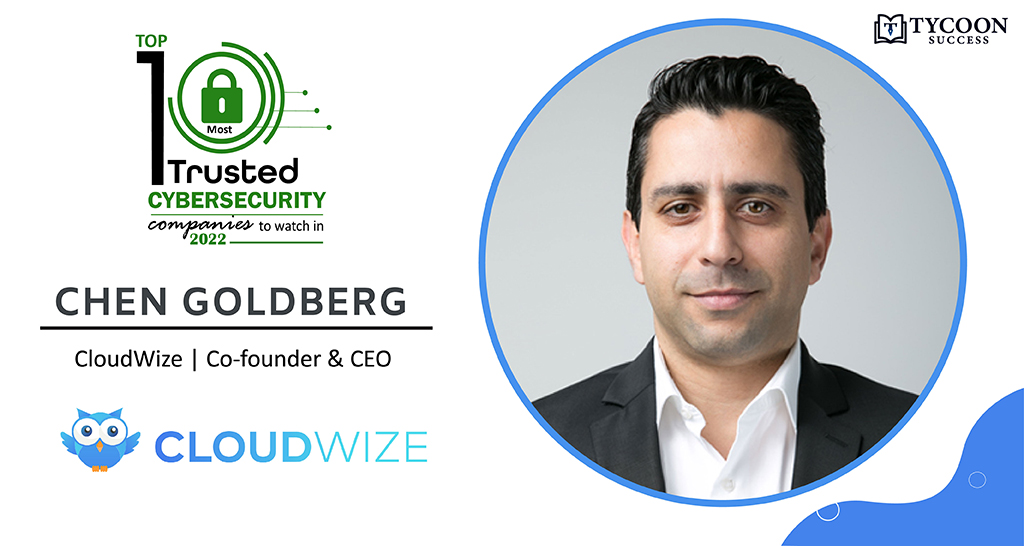
CloudWize: Helping Companies Get Maximum Cloud Security and Compliance

Cybersecurity has always been a never-ending race against time, but the changes are gaining momentum. Companies are slowly investing in various technologies that can help them run businesses. Thanks to technological advancements, companies are now layering more systems into their existing IT network to support their customer experience, and generate value, and remote work. However, adding these new layers often comes with the cost of creating new vulnerabilities.

On the other hand, cybercriminals use various integrated tools and capabilities with machine learning and artificial intelligence to exploit vulnerabilities. Therefore, the threat is growing fast, and no organization is immune. Everyone, from small and medium enterprises to various municipalities, governments, and large multinational companies, faces such risks.

With the mission of providing an easy-to-use tool for complex environments and 24/7 maximum
cloud security and compliance to every company, Chen Goldberg, Co-founded CloudWize, a no-code platform for maximum cloud security and compliance from architecture design to runtime.

Chen is an experienced cloud engineer with knowledge and hands-on experience in various technologies like Cloud Computing, Cloud Architecture, Consulting/Software Development, DevOps tools, and Risk Management. During the last 15 years, he has worked in the development and operations, building infrastructure and implementing best practices in different leadership roles.

Since CloudWize’s foundation, Chen and his team have been building and improving the best tools for cloud security and compliance with the vision to include all the cloud pillars.

Helping Companies to Secure their Cloud

As a no-code platform for maximum cloud security and compliance from architecture design to runtime, CloudWize helps organizations secure their cloud and uphold regulations. During the period of the last 10 months, as much as 79% of companies have suffered from cloud data breaches, exposing them to hefty fines from regulators, getting a bad reputation, and ultimately losing customers.

Thanks to CloudWize, companies can now get more than 800 rules that are continuously running on their cloud services. “But to really better cloud security and compliance, we have investigation abilities like no other. The CISO, DevSecOps, or anyone else can easily detect and fix cloud issues, no code required.“- says Chen.

CloudWize has various alerts and insights showing security, compliance, operations, costs, and performance coverage reports. It also provides much-needed recommendations to users on how to improve their coverage based on the severity and auto-remediation with just a click of a button. Additionally, CloudWize’s drag and drop interface makes it easy to customize security, compliance, cost, operations, and performance rules. Anyone who wants peace of mind should choose CloudWize because it’s a personal virtual CISO that works automatically 24//7.

Chen believes one of the biggest challenges for the companies lies in their cloud’s access control, mainly because various stakeholders need to access the cloud. However, with CloudWize, companies can now see who did what, where in the cloud, and when. As a holistic platform to cloud security and compliance, CloudWize is often referred to as a cloud security center of excellence. It also provides users extensive context in minutes and helps SMBs, enterprises, and even MSP and MSSP to reduce operating costs by up to 90%.

The Differentiating Factor

Chen explains that CloudWize’s competitors offer an out-of-the-box solution, while his company has not only made rules, but it also has no-code customization. Also, with the platform’s graph engine, users can investigate events, metrics, data transfer, configurations, network relations, and cost business impact in minutes.CloudWize combines the risks with actual pentest to enable prioritization of the company’s risks, which gives real context to the company and reduces the noise. Also, as a client-focused company, CloudWize’s dedicated support team helps right from onboarding and anything else that its users need.

The Pandemic’s Effect

As we all witnessed, the pandemic has accelerated the move to the cloud as people had to work from home. So, along with big tech companies, small and medium businesses also moved online, and with that move came many security breaches and regulatory compliances. So, CloudWize is working with companies of all shapes and sizes to make everyone secure and compliant.

We want everyone who uses the cloud to have maximum cloud security and compliance, understand what’s going on, and see the connection and business impact. After all, there are reasons behind the configurations and how the architecture is built. If someone is unaware of those reasons, he can do something that will impact other stakeholders and can also impact the entire company.“- asserts Chen.

Vikram Venkatasubramanian: Helping Consumers with Simple, Comprehensive, and Affordable Online Privacy and Security Solutions

The average US household today has around 24 connected devices. An internet-connected home can make over 50,000 internet requests daily and the average phone app collects 24 pieces of information about its user. A connected home today has enough computing power, storage capacity, and networking power to rival a small enterprise from two decades ago. These data points represent a large and growing cyberattack surface that can be exploited by both hackers and marketing companies. This problem space led Vikram Venkatasubramanian to further investigate the issues around online privacy and security in home networks – an investigation that led to many shocking findings pertaining to our online privacy and security.

Vikram says, “The average home could see up to 12,000 cyberattack attempts per day! On any given day, on average, 10% of the internet traffic is related to gathering data about us. We are all literally one click or less away from a cyberattack, and in many cases, we have been attacked, and we just don’t know it.

Vikram strongly feels that online privacy and security is a fundamental right. Passionate about solving the issue of privacy and security, in March 2020, Vikram founded Nandi Security, an online privacy and security company for the entire connected home.

The Cybersecurity Expert

Born and raised in Chennai, India, Vikram Venkatasubramanian immigrated to the United States during the mid-90s to pursue his second Master’s degree. Today, Vikram is a technology industry veteran with over two decades of experience across healthcare IT, telecom/CRM, and cybersecurity. Vikram considers the dozen or so years of experience in cybersecurity to be the most personally and intellectually rewarding time of his career.

Vikram’s academic qualifications include a Master’s degree in Mathematics from the Indian Institute of Technology – Madras, a Master’s degree in Computer Science from the University of Missouri – Columbia, and a Master’s degree in Business Administration from Cornell University. However, Vikram feels education is not only the primary driver for him; the profound learnings he accumulated over the years interacting with the some of the most well-known cyber security experts on the planet helped shape his passion for personal privacy and security space.

Cyber Security Solution for Connected Homes

Vikram says, “We cannot have a conversation about cybersecurity in the connected home without addressing privacy. We also cannot speak of comprehensive security and privacy in the connected home with device-by-device-based solutions.

Nandi Security’s Kavalan is an online privacy and security product aimed at making the task of protecting connected homes easy for the average consumer. It protects all the devices in the connected home from cyber threats, including malware, botnets, phishing sites, etc., while protecting the privacy of all individuals in the connected home by blocking ad networks, data brokers, trackers, pixels and other privacy violating entities. With Kavalan, there’s no software to install or devices to buy, and the best part is the product can be set up within 5 minutes or less for uninterrupted protection against cyber threats. The product’s ease of deployment, coupled with its comprehensive protection capabilities, is unparalleled in the entire industry.

Helping with Comprehensive Privacy and Security Services

In 2020, IDC published a connected home security research that identified seven different categories of products that a consumer would need to buy in order to enjoy comprehensive privacy and security. Nandi Security saw an immediate need to build a better solution for the average consumer, as there was no other way for a person with no cyber security expertise to have the awareness and technical expertise to find and use such solutions. Additionally, the combined cost of such products often makes them financially unviable for the average household.  Under Vikram’s leadership, Nandi Security’s mission is to simplify and make it affordable for everyone to enjoy comprehensive privacy and security in the connected home.

Tackling the Pandemic

The pandemic has proven to be an accelerator in the cyber security industry. With remote work becoming an immediate requirement, companies soon realized that their network perimeter extends into the connected home. The initial attack vector to penetrate a corporate network may not need to be the corporate device; it could be a camera, thermostat, wearable or any other device in the employee’s home. Further from a consumer perspective, there has been a surge of interest in privacy issues amongst the general public given the post-pandemic events surrounding the US elections and the recent US Supreme Court rulings. This has resulted in a greater need and awareness at both the corporate and consumer levels for privacy and security products.

Vikram states, “While we did not see a pandemic coming, we saw the fundamental issues around privacy and security brewing a long time back, and we believe we are at the right time with the right product to address the problem.

Preparing for the Future

Vikram is a believer in a free, open, safe, and equitable internet, and he understands that Nandi Security can make a significant contribution to the ‘safe’ and ‘equitable’ parts of that conversation. His primary goal is to make Kavalan the single most trusted name for families worldwide when it comes to protecting their online security and privacy. The organization is going about it by keeping simplicity, transparency, and quality as the prime pillars of focus for its product.

Protecting your home and your family should not be as complex as it is today, and as broadband coverage expands across the world today, safety and privacy should come with it by default. The very fibers of connectivity that promise to improve our lives are already being used to shift the balance of equity both in terms of cyberattacks and surveillance capitalism. I believe that with Kavalan, we have taken the first step towards shifting the control back into the hands of the consumers.”- Vikram states.

Nandi Security is already working on evolving Kavalan into a full-fledged Intelligent Digital Safety Solution for the connected home.

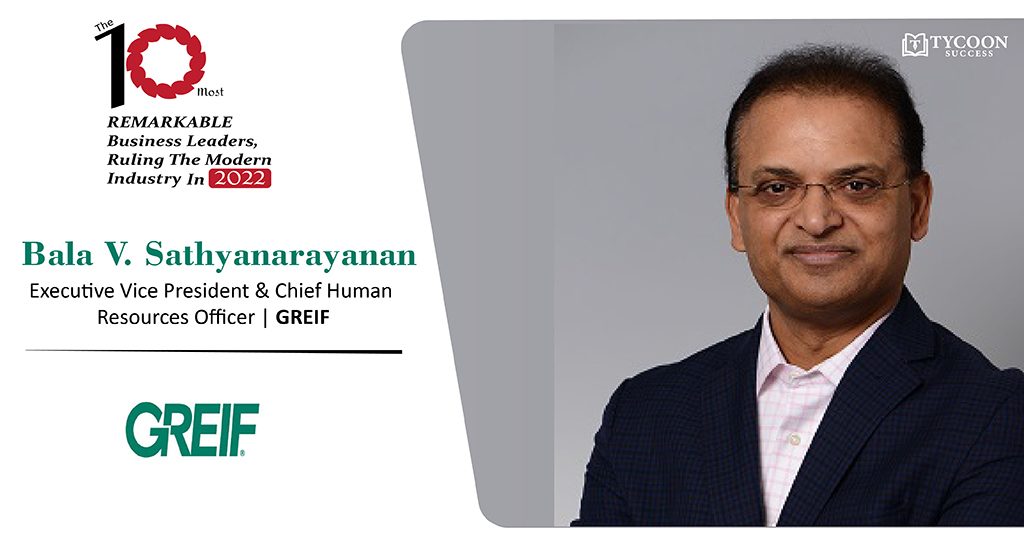
Bala V Sathyanarayanan: Creating a Diverse and Engaged Workforce

Meet Bala V Sathyanarayanan, the Executive Vice President and Chief Human Resources Officer at Greif a 145-year-old Fortune 500-sized global leader in the industrial packaging products and services industry. Greif operates in over 220 locations spread across 40 countries and four continents.

He is an NACD Certified Corporate Director with a passion for creating the highest standards of boardroom excellence. Bala currently serves as Chairman and Board Director of Balmer Lawrie Van Leer Limited and as the Board Director for Columbus Council for World Affairs. Additionally, he is on the board for the Center for Executive Compensation in Washington, D.C.

Bala’s parents always encouraged him to work hard and serve the people around him. A lesson also taught by growing up an Eagle Scout. So, he took lifelong advice and worked very hard to make a difference to the individuals, teams, and organizations he has worked. Servant Leadership is at the core of who he is and how he leads.

He says, “I believe that when you give your energy to an important mission, you are helping every stakeholder achieve clarity for their organization. You can do this by sharing your goals with others, inspiring them, and giving them hope for their dreams, or just showing them what is possible when you set your mind to something.”

Bala graduated with an Advanced Management degree at Harvard Business School. Additionally, he has received a Master’s in Human Resource Management from Rutgers University, New Jersey. He also holds a Bachelor of Engineering in Electronics and Communications Engineering from SVCE and an MBA from the University of Madras.

Before joining Greif, Bala served as the Executive Vice President of Xerox Corporation, where he led the HR and Business Transformation of the company. Prior to that, he served in multiple leadership roles at companies like Hewlett-Packard, Avaya Inc, Coca-Cola, and Otis Elevator Company.

A recipient of many global awards, Bala was also named in the list of Outstanding 50 Asian Americans in Business by the Asian American Business Development Center (AABDC), Executive of the Year by Columbus CEO Magazine, Top Inspiring Business Leaders of the Year in 2020 by Industry Wired Magazine, 10 Most Influential Business Leaders to follow in 2021 by CIO Insights Magazine.

Helping Companies with Path Breaking Products

Founded in 1877, Greif is a leading industrial packaging and services supplier. Spread across 40 countries, Greif remains committed to being the highest performing customer service entity for its global and regional customers. The organization’s core values shape its future and have helped it to stay on top of its competitors.

Greif ‘s Global Packaging Division helps its clients with steel, fiber, and plastic drums; intermediate bulk containers (IBCs); FIBCs; container liners; closures; filling, and reconditioning services. These products are used to protect and safely transport shipments around the globe. Bala says, “Our colleagues are here to help customers develop new packaging solutions or to partner with them to solve difficult supply chain challenges.” Greif ‘s technical expertise and years of experience enable it to guide customers through their product selection journey.

On the other hand, the Paper Packaging and Services (PPS) division of the organization manufactures containerboards, coated recycled paperboards, uncoated recycled paperboards, industrial and corrugated products, and offers recycling services. The PPS division serves the construction, paper products, textiles, automotive, explosives, and many other industries in North America. The Paper Packaging and Services Division has a closed loop system that successfully recycles recovered fibers, which provides Greif a competitive advantage through flexibility, supply security, and sustainability.

Tackling Challenges

Bala and his team’s biggest challenge related to talent optimization lies in the heightened focus and need to develop, attract, and hire new talents required to align with the organization’s business needs in the labor market both for today and in the future. Additionally, they need to balance the need to hire and maintain Greif ‘s essential workers at the plant while optimizing the firm’s approach to creating a more flexible, responsive, and engaging work environment for those who have an ability to work in a hybrid setting.

“We’ve been faced with rethinking our approach to learning and have pivoted to the launch of a completely virtual Greif University to continue meeting the need to educate our colleagues and ensure our investment in their continued global growth. This also results in us revamping our Leadership Development approach to stay in front of the trends in learning approaches that will likely be sustained post-pandemic.“- states Bala.

The Pandemic

Just like most other companies, Greif also had to adapt to every changing phase of the pandemic to develop, adapt, and update its protocols and monitor the safety of its Engaged workforce in more than 40 countries worldwide. Throughout this devastating pandemic, Bala and his team have developed various new protocols and either needed to change or emphasize them as more information became available in the public domain. From the beginning, the entire team followed the science and was guided by the best scientific organizations. Bala explains that they were also able to put various global and regional task forces in place, which led Greif through this pandemic.

The Future

Bala and his team’s primary mission is to create a world-class, motivated, diverse, and engaged workforce to help Greif deliver its global vision. Bala says, “My role is that of a strategist, an activist inside the organization to shake things up, helping the organization become more innovative. My mission as the Global CHRO is to manage the present while laying the foundations to help sustain global success for the future; we call it our Build to Last strategy.”

“My future aspirations involve helping others and using my unique gifts to make a difference by creating thriving communities across the countries that Greif operates.”– Bala adds. He plans to achieve these goals by focusing on the strengths of the organization’s Executive Leadership team which includes being candid, the love of learning new things, and the desire to make a positive impact on Greif ‘s global customers by providing them with excellent customer service.

Johnny Casana: Building a Grid Bigger than the Weather

Meet Mr. Johnny Casana, a true leader in the renewable energy business with a clear vision for a clean grid. He directs North American strategy for Pattern Energy and knows there is a straightforward two-step process to solve climate change: clean the grid and electrify everything. “We have the tools, we have the technology, we have the time,” he said. “It’s actually such an exciting moment to be in this business-wind and solar are now the least-cost power that the world has ever known, electric transmission is nearly everywhere already, and the gaps can be connected. The grid can be big, it can be clean.”

Mr. Casana is an internationally recognized expert in wind, solar, & transmission development, and is especially known for his role in electricity market reforms that the grid needs in order to rise to the challenge of decarbonization. Since his transition to the private sector from anthropology, Mr. Casana has been a dynamic force in the clean energy industry.

Presently Mr. Casana serves on the leadership team of Pattern Energy, the largest independent renewable energy company founded and headquartered in the United States. As a powerful driver of energy policy at the national level and as the Chair of State Policy for the national clean energy trade group, he has represented the business voice of real climate solutions on several industry boards. He has also lent his experience and expertise to multiple international delegations on business and climate, including a trade mission hosted by the President of Mexico, a Vatican Executive Summit convened by Pope Francis, and the United Nations Climate Conference in Paris, where countries across the planet signed the historic Paris Accords. Mr. Casana knows that renewables can do the job, which is an incredible industrial story of technological innovation, corporate ingenuity, strong supportive policies, and the entrepreneurial spirits of companies like Pattern Energy. He believes the power switch from a combustion grid to the ones run by the weather is much cheaper, better, and more reliable than the outdated, expensive systems built centuries ago. “We can build a 21st Century grid,” he said. “We can source our power from the sky instead of the ground. We can survive; we can thrive. To affordably and reliably run our grid, our society, our entire economy on the abundance of the weather, we really just need a grid that is bigger than the weather.”

The Steadfast leader

With his impeccable track record of commercial success in renewable energy and a hand in developing and constructing over 2,500 megawatts of wind and solar energy projects in the U.S., Canada, and Central America, Mr. Casana is entirely committed to his vision of a clean grid. Over the years, he has built numerous wind, solar, storage, and transmission projects that now provide clean, zero-emission electricity to more than 55 million end-use customers daily.

After proving himself as a wind and solar project developer, Mr. Casana moved into political and regulatory affairs, helping to lead government relations for Pattern Energy and building coalitions with a myriad of stakeholders and state and local governments to design and pass some of the most critical, outcome-oriented and business-friendly climate policies in the world. Back in 2018, he provided lead testimony for the most important 100% Clean Energy state legislation in the U.S., the California law SB100, and within two years he successfully helped to pass similar state laws throughout the West, to such a point where the U.S. Western electricity grid is more than 80% aligned on clean energy goals. “The challenge is now less technical, and less political, and almost entirely in implementation, on excellence in execution, and that is precisely where Pattern Energy thrives.”

Building the Largest Wind Project in the U.S. History

Pattern Energy has a reputation for achieving the impossible, taking on the most challenging projects, finding solutions & partners, and getting them done. Mr. Casana played an instrumental role in one of Pattern Energy’s most recent success stories, Western Spirit Wind, the largest clean power project in the history of the U.S. With Mr. Casana as the head of State and Local Government Affairs, this interregional wind and transmission concept was an innovative collaboration between Pattern Energy, the State Government of New Mexico, and the municipal governments of San Jose, and the City of Los Angeles. Even bigger than a nuclear plant, Western Spirit Wind provides more than a gigawatt of the country’s greatest renewable resources to California, one of world’s largest energy markets. The wind from Western Spirit is now delivered across a combination of new transmission lines built by Pattern Energy, and old revitalized transmission lines that were originally built by the city of Los Angeles decades ago to service power from coal plants. This partnership, the retirement of coal, and the use of existing grid capacity was a meaningful public-private collaboration that yielded a superhighway of clean energy directly into the city of Los Angeles. Thanks to the powerful combination of new and old, the political will of many governments, and the transformative technical approach to bridge transmission gaps in the grid have helped produce clean power for the country’s biggest industrial economy. The Mayor of Los Angeles, Eric Garcetti, said that Pattern Energy’s Western Spirit Wind “shows that solutions to the climate crisis have never been cheaper, and helps realize our promise of lower emissions, less pollution, and more clean energy innovation.”

“We have the tools, we have the technology, we have the time”

Indeed, the wind facility was a very cost-effective solution for the Californians that the city council described as “the best overall value” to the residents of L.A. after Pattern Energy won a competitive solicitation for a power supply contract, besting over 100 other project proposals. Western Spirit Wind will now meet more than 6% of the climate change goals of over 4 million residents of Los Angeles. It also serves its clean power to millions more throughout the state.

Mr. Casana was also involved in the half-gigawatt New Mexico to California wind and transmission project named Broadview & Grady Wind, which was fully commissioned in 2019. He is presently running the strategy for his company’s next big project, SunZia Wind, which will be three times larger than Western Spirit Wind at over 3,200 megawatts of wind. The wind project is coupled with a 550-mile high-voltage transmission line, with anticipated commissioning in 2026.

When it comes to the climate, Mr. Casana believes in big swings. With the completion of Pattern Energy’s third suite of wind transmission projects in New Mexico, Pattern Energy will be responsible for more 20 million megawatt hours a year of clean power to California, which is more than all of the state’s rooftop solar panels combined. “When governments, corporations, and large utilities make the right choices on climate, those choices impact tens of millions of people for the better all at once. It’s a great big societal swing.”

Opportunities to Grow

Pattern Energy has broken the gigawatt barrier this year, but for Mr. Casana, the exciting part is within a decade that scale will be a common occurrence. “When I first started in this business, we were amazed when someone could pull off 100 megawatts in a single shot, but today that is about the minimum we could consider. We’ve done a gigawatt now, our next one will be three times the size, and that will become the new normal. It’s incredible.”

Wind and solar are so economical compared to conventional power like coal and fossil gas that Mr. Casana believes there’s a high chance that the necessary transmission gaps in the grid will get plugged, the necessary reforms will be enacted, and the economy will be in a position to run primarily on the weather without disrupting the life of everyday Americans. However, he also knows that the scale of buildout to maintain climate commitments will require exponential growth, which is both a challenge and an opportunity for an entire generation of energy professionals starting their careers.

When it comes to switching power from combustion to renewable weather-based power, Mr. Casana cites studies from U.S. National Labs that show America’s clean energy industry would need to deploy as much as 80 gigawatts of wind and solar energy every year from 2025 to 2040. However, the high water mark was only 29 gigawatts last year, nearly double the deployment level from as early as 2019. “There is an appetite in the U.S. for the clean energy industry to double in size and double again in just the next few years, with still more room to grow new businesses.”

The Future

Mr. Casana carries a calm and quiet optimism about the business role in building a 21st-century grid. He emphasized the growing need for new talents and projects when asked to advise young professionals. He believes the U.S. needs a grid bigger than the weather, a grid that can move power across the continent for a constant source of reliable, renewable power as different regions rely on weather patterns from each other. The country will need many more mega-projects like Western Spirit and SunZia. “It’s like a symphony,” he says, “there are different sections, horns, wind, what have you, and this one or that may be quiet for a beat, but the blend of music is always playing, always beautiful.”

He believes there is so much business opportunity and room for growth and he is optimistic too about the climate emergency. He doesn’t get bogged down on blame for greenhouse gas emissions. He says, “this era right now, our time, it is the first moment in history that we have all of the tools and enough time to act. We have a runway just long enough to stem the worst of climate change, to act on emissions. We have real, commercial technologies that are viable, scalable, ready-for-primetime, with supply chains and global talent that can execute, finance and deliver the billions of dollars of infrastructure that will necessary for survival of our species.”

“Renewables have been de-risked, we know how to get them built, we know how to run the system. We need more of course, both power and transmission, sure. But it is no longer a question of inventing something or hoping for some future political will. The business case is here. The moment has come to really do it.”

When asked about whether alternative energy is the future, Mr. Casana turns says wryly, “Wind and solar were the future twenty years ago. It’s such a 90’s idea to say that, to call them the ‘future,’ to call them even ‘alternative.’ Wind and solar are a $500 billion global industry and growing, they are the vast majority of new power projects worldwide, they have been for years, and will be for decades. Renewables are not alternative and they are not the future – they are mainstream and they are today.”


Exit mobile version